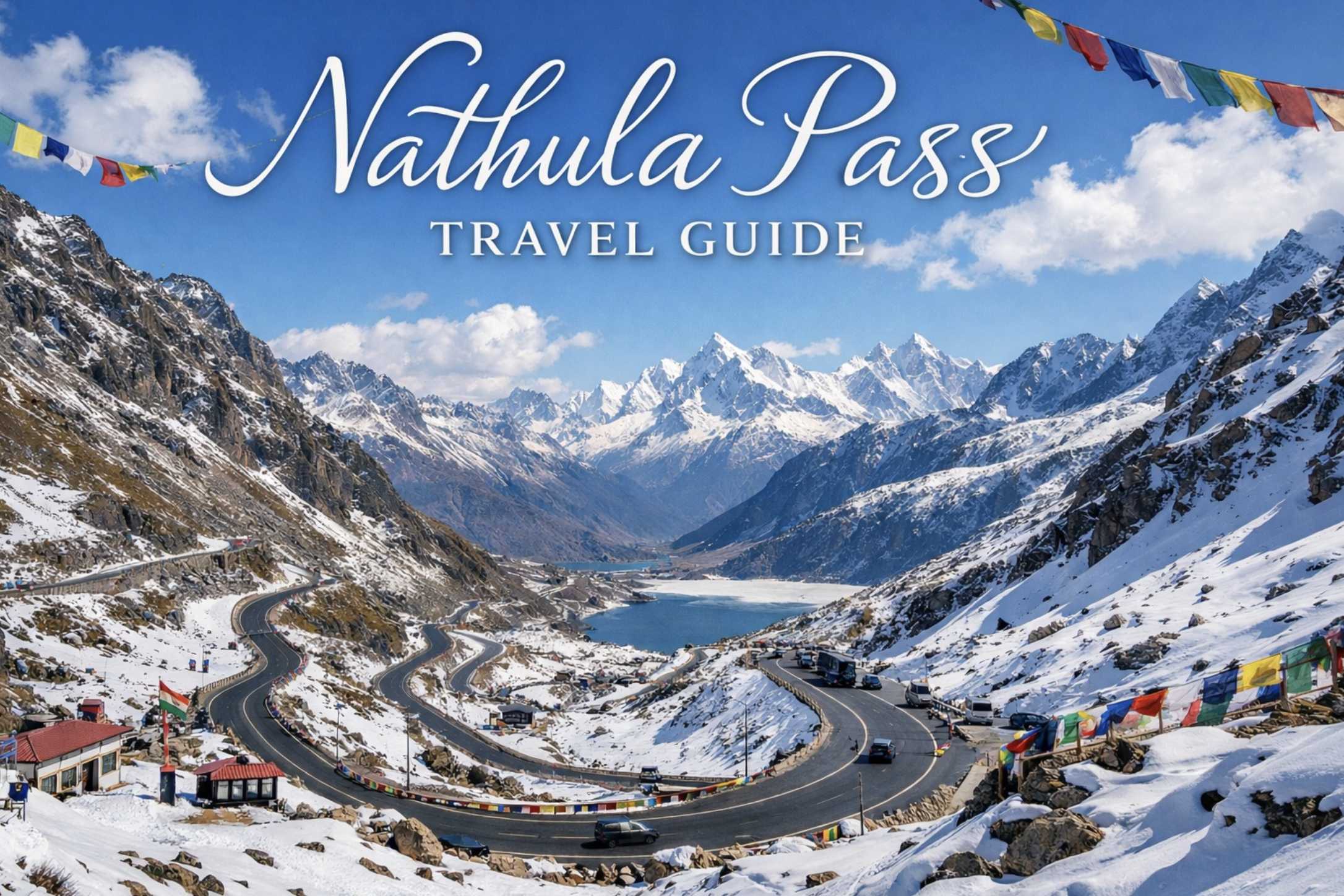
It is said that a Nathula trip in your life is not just another mountain destination that you do frequently. This is why tourists should go through a proper Nathula Pass travel guide before planning this trip.
However, what makes this location truly remarkable is its position on the Indo-China border. When you're standing at Nathula, you're literally at the edge of Indian territory, with Tibet (now part of China) on the other side.
But let’s be honest, planning a trip to Nathula requires effort. You need permits, you have to deal with unpredictable mountain weather, and altitude sickness is a real concern.
So why do thousands of travellers make this journey every year? Here's why Nathula Pass deserves a top spot on your Sikkim itinerary and how you can make this trip unique without any problem…
Why Visit Nathula Pass?
For tourists like you, Nathula offers a controlled but enriching experience. You can visit the border gate, observe the Indian Army posts, and on clear days, even see Chinese border personnel and infrastructure on the other side.
Our guests often describe it as surreal when standing at such a geopolitically significant location while surrounded by stunning Himalayan beauty. The soldiers stationed there are usually friendly and happy to share information (though photography restrictions apply in certain areas).
Now, let’s look at why visit Nathula Pass…..
A Unique Geopolitical Experience: At Nathula, you'll experience a piece of living history. The border gate, the Indian and Chinese posts visible across from each other, and the palpable sense of national pride create an atmosphere unlike anywhere else.
Stunning Himalayan Landscapes: The journey to Nathula Pass takes you through landscapes that seem almost otherworldly. Snow-capped peaks stretch endlessly in every direction, pristine valleys unfold below, and on clear days, the views are nothing short of spectacular. Our guests often tell us that the photographs don't do justice to the raw beauty of these mountains.
Historical Significance: This pass was once part of the ancient Silk Route, connecting Tibet with India for centuries of trade and cultural exchange. It witnessed the 1962 Indo-China war and remained closed for over four decades before reopening to tourists in 2006. Walking through Nathula is literally walking through pages of history.
The Complete Sikkim Experience: When you visit Nathula Pass, you're not just ticking off one attraction. The journey includes the gorgeous Tsomgo Lake (Changu Lake), the revered Baba Harbhajan Singh Mandir, and, if you're lucky, a side trip to Zero Point. It's an all-encompassing mountain adventure packed into one unforgettable day.
Best Time to Visit Nathula Pass
After years of organising Nathula Pass trips, we can confidently say the best time to visit Nathula Pass is from May to June and September to mid-October. Here's why:
May and June offer:
-
Stable weather with minimal rainfall
-
Clear visibility for photography and sightseeing
-
Moderate temperatures (relatively speaking!)
-
Beautiful snow cover without extreme cold
-
Higher chances of successful trips (fewer cancellations)
-
Peak tourist season means more crowds
-
Slightly higher tour package costs
September and October provide:
-
Post-monsoon crystal-clear skies
-
Pleasant daytime temperatures
-
Fewer tourists compared to summer
-
Fresh snowfall on peaks creates stunning contrasts
-
Excellent photography conditions
-
Nights can be very cold
-
Early October still has some monsoon tail-end weather.
Nathula Pass Permit: Complete Guide
If there's one thing that confuses first-time visitors to Nathula Pass, it's the permit process.
We get dozens of questions about this every week, such as "How do I get the permit?" "Can I apply myself?" "What documents do I need?" Don't worry, because here you’ll get all the information about the Nathula Pass permit in simple, straightforward terms.
Nathula Pass Permit Requirements
Who Needs a Permit?
Here's the simple answer: Everyone visiting Nathula Pass needs a permit. No exceptions.
Whether you're travelling solo, with family, or in a group, whether you're from Sikkim or from Kerala, you absolutely must have a valid permit to visit Nathula Pass.
This is a restricted border area under military supervision, so the permit system is strictly enforced. We've seen tourists turned back at checkpoints because they didn't have proper permits, and it's heartbreaking after they've come all the way from Gangtok.
However, foreign nationals are NOT permitted to visit Nathula Pass. Yes, you read that right. This is a hard restriction that applies to all non-Indian citizens, regardless of their country of origin or the purpose of their visit.
We've had guests from the United States, Europe, Australia, and other countries in our Sikkim tours, and unfortunately, we have to arrange alternative activities for them when the rest of the group visits Nathula. It's one of the few places in Sikkim with this strict restriction.
Documents Required for Nathula Pass Permit
Getting your documents right is crucial for a smooth permit process. Let us walk you through exactly what you need, based on thousands of permits we've processed over the years.
-
A valid Government-Issued ID Proof (Mandatory).
- Two recent passport-size colour photographs. (Taken within the last 6 months)
Documents for Minors (Children Under 18)
If your child has an Aadhaar card with their photograph, the process is straightforward, just like for adults. But, if your child has no Aadhar card, then carry..
-
The child's birth certificate (original or attested copy).
- One parent's valid ID proof.
- Two passport-size photos of the child.
The permit will be issued in the child's name but will reference the parent's ID details. At checkpoints, you'll need to show the child's birth certificate along with your own ID.
Nahula Pass Permit Booking Online
Here's something that surprises many people because you cannot directly apply for a Nathula Pass permit yourself as an individual tourist. The permit system works exclusively through registered tour operators and travel agencies.
So, the "Nathula pass permit booking online" process actually means booking through an authorised tour operator who handles the permit application for you.
The Nathula Pass permit cost and process might seem complicated at first, but with the right tour operator, it's quite smooth. We handle all the paperwork, coordination, and logistics so you can focus on enjoying this once-in-a-lifetime experience at one of India's most spectacular border passes!
Nathula Pass and Nearby Attractions
One of the best things about planning a Nathula Pass trip is that you're not just visiting one destination; you're experiencing an entire high-altitude circuit filled with stunning lakes, spiritual sites, and dramatic landscapes.
Most Nathula tour packages naturally include these nearby attractions, making it a comprehensive day of exploration. Let's walk you through what else awaits you on this incredible journey.
Tsomgo Lake (Changu Lake)
Tsomgo Lake sits approximately 18 kilometres before Nathula Pass, at an altitude of 12,310 feet. Nathula pass distance from Gangtok is about 38 kilometres, which roughly take 2-hour drive. Every single Nathula Pass tour stops here as it's not optional; it's essential. In fact, your Tsomgo Lake permit is bundled with your Nathula permit.
What Makes Tsomgo Lake Special
This glacial lake is sacred to local Buddhist communities and is one of the highest lakes in India accessible by road.
The name "Tsomgo" means "source of water" in the Bhutia language, and once you see it, you'll understand why it's revered.
The lake is about 1 kilometre long, oval-shaped, and surrounded by steep mountains. What makes Tsomgo truly magical is how it transforms with the seasons. We've visited this lake probably over a hundred times, and it never looks the same twice:
-
In winter (December-March): The lake freezes completely, creating a white ice sheet. Walking on the frozen lake (where permitted) is surreal.
-
In spring (April-May): Ice begins melting, creating floating ice chunks that shimmer in the sunlight.
-
In summer (June-September): The lake reveals its brilliant blue-green waters, reflecting the sky and surrounding peaks.
-
In autumn (October-November): Crystal clear waters with golden hues from surrounding vegetation.
How Much Time to Spend
Most tours allocate 45 minutes to 1 hour at Tsomgo Lake. This gives you enough time to:
-
Walk around the lake periphery (there's a designated path)
-
Take photographs from multiple angles
-
Enjoy a yak ride (₹500-700) if you're interested, or if your kids especially love this
-
Try local snacks from small shops (Maggi, momos, tea)
-
Visit the small Shiva temple near the lakeshore
Our tip: Don't rush Tsomgo. Yes, you're eager to reach Nathula, but this lake deserves your attention. The early morning light on the water, the prayer flags fluttering in the breeze, the crisp mountain air, and it's a moment to savour.
We always tell our guests: arrive at Tsomgo with fresh energy, as altitude acclimatisation begins here before you ascend higher to Nathula.
Baba Harbhajan Singh Mandir (Baba Mandir)
Baba Mandir is located approximately 15 kilometres beyond Tsomgo Lake and about 5 kilometres before Nathula Pass, at an altitude of around 13,123 feet. It sits right between your two main destinations, making it a natural stop on the journey.
The Story and Significance of Baba Mandir
This is where the Nathula trip becomes more than just sightseeing, but it becomes deeply moving. Baba Harbhajan Singh was an Indian Army soldier posted near the Indo-China border who died in 1968. According to widely believed accounts among soldiers, he drowned in a glacier while escorting a mule column.
What happened next is what makes this shrine extraordinary. His fellow soldiers reported seeing Baba Harbhajan Singh in their dreams, guiding them and warning them of dangers.
His spirit, they believe, continues to protect Indian soldiers stationed at this treacherous border. The Indian Army built this shrine in his honor, and to this day, Baba is treated as a serving soldier and his uniform is changed regularly, his bed is made, and he's even promoted in rank posthumously.
Photography is generally allowed outside the main shrine, but always ask permission and be respectful. This is a sacred place for many.
Zero Point
What is Zero Point?
Zero Point is the farthest point civilians can reach in this region, literally the "zero point" beyond which only military personnel are allowed. It sits at approximately 15,300 feet in altitude, making it even higher than Nathula Pass, and offers stunning panoramic views of snow-covered Himalayan peaks.
The landscape here is stark, dramatic, and otherworldly, with endless snow fields, icy winds, and the feeling of being at the edge of the world. On clear days, you can see multiple mountain ranges stretching into Tibet.
Nathula Pass to Zero Point Distance
Zero Point is approximately 25-30 kilometers from Nathula Pass, depending on the exact route taken. However, here's the catch: it's not a straightforward drive. The road conditions are considerably rougher than the Gangtok-Nathula route, and weather plays an even bigger role.
Is It Included in Standard Tours?
Here's the honest answer: No, Zero Point is NOT included in standard Nathula Pass tour packages. Let us explain why and what your options are.
Most basic Nathula packages cover: Gangtok → Tsomgo Lake → Baba Mandir → Nathula Pass → return to Gangtok. This is already a full day (8-10 hours).
Adding Zero Point requires:
-
Additional permit (separate from Nathula permit, costs ₹1,500-2,000 extra)
-
Extra 3-4 hours (round trip from Nathula)
-
Better vehicle (road conditions are tougher)
-
Weather cooperation (Zero Point closes more frequently than Nathula)
-
Physical endurance (higher altitude means more challenging conditions)
Should You Go to Zero Point?
Based on hundreds of tours we've organised, here's our honest assessment:
Go to Zero Point if:
-
You're physically fit and acclimate well to altitude
-
You have extra time and budget (add ₹1,500-2,500 per vehicle)
-
You're a serious mountain enthusiast or photographer
-
The weather is exceptionally clear
-
You've already visited Nathula before and want something more
Skip Zero Point if:
-
This is your first high-altitude experience
-
You have elderly members or young children
-
Time is limited (better to enjoy Nathula leisurely)
-
The weather is marginal
-
Budget is a constraint
From our experience, about 20-25% of our Nathula guests opt for the Zero Point extension. However, we've also had guests who struggled with the altitude at Zero Point, turning a great day into an uncomfortable one.
Our advice: Decide based on how you feel at Nathula Pass. If you're energetic, breathing comfortably, and the weather is perfect, consider it.
Other Tourist Spots Near Nathula
Beyond the main attractions, this region has several other beautiful spots worth knowing about, especially if you're planning multiple days in East Sikkim.
So, the key takeaway for visiting Nathula Pass is to prepare thoroughly, respect the environment and authorities, manage your health proactively, and lower your expectations for modern amenities. This isn't a five-star resort experience, but it's a raw, real adventure to one of India's most remote and strategic locations. And honestly? That's exactly what makes it so special. The challenges are part of the story you'll tell for years to come!
FAQs
Can foreign nationals visit Nathula Pass?
No, foreign nationals are not allowed to visit Nathula Pass. This area lies on the Indo–China border and is a restricted military zone. Only Indian citizens with a valid permit issued through an authorized tour operator are permitted to visit. Foreign tourists can explore other parts of Sikkim such as Tsomgo Lake, Gangtok, Yumthang Valley, and Lachung.
How cold is Nathula Pass in summer and winter?
Nathula Pass remains cold throughout the year due to its high altitude of about 14,140 feet.
-
Summer (May–June):Temperature ranges between 5°C to 15°C during the day. Nights can drop close to freezing. Light snowfall is still possible.
- Winter (November–March):Temperatures can fall to -10°C to -25°C. Heavy snowfall often blocks the road, and the pass usually remains closed.
Can we visit Nathula Pass without a tour operator?
No, you cannot visit Nathula Pass without a tour operator. Individual tourists cannot directly apply for permits. The permit must be arranged through a registered travel agency or tour operator in Sikkim who submits the documents to the authorities.
Is photography allowed at Nathula Pass?
Photography is partially allowed at Nathula Pass. You can take photos of landscapes and designated areas.
Can senior citizens visit Nathula Pass?
Yes, senior citizens can visit Nathula Pass if they are in good health and physically fit.


(0) Comments:
Leave a Reply